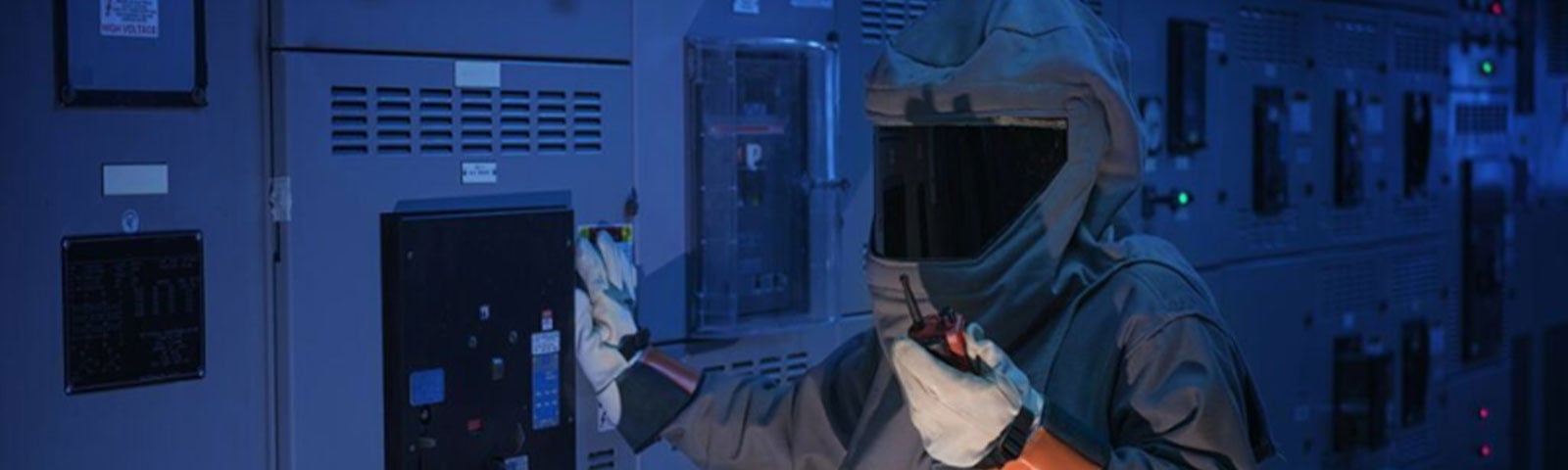
Arc flash hazards remain a critical safety and operational concern in medium- and high-voltage environments. As systems become more complex and electrical loads continue to evolve, keeping accurate hazard data and clear labeling is essential for protecting personnel and supporting reliable operations.
These updates in the 2026 NEC introduce changes to arc flash requirements and labeling standards, ensuring consistent electrical safety and hazard communication across all facilities.
These updates focus on improved hazard communication, closer alignment with field conditions, and increased accountability for up-to-date system information.
For facility owners, safety managers, and engineers, these changes go beyond code compliance. They affect how electrical systems are documented, how maintenance is prioritized, and how teams interact safely with energized equipment. Keep in mind that adoption of the NEC varies by state. Some regions may take several years to enforce NEC 2026, and certain states use their own versions of the code, so compliance timelines may differ. Staying ahead of NEC 2026 is key to reducing risk, avoiding compliance gaps, and supporting long-term system reliability.
Overview of NEC 2026 Updates
A major focus of NEC 2026 is Section 110.16, which addresses arc flash warning labels. The updates emphasize clarity, consistency, and that field-applied labels reflect current system conditions. This marks a shift from generic warnings to data-driven labeling that provides actionable information based on system analysis.
Key changes include:
- Expanded scope of equipment requiring labels: More types of electrical equipment now fall under this requirement, including disconnects, prompting facilities to reassess assets that may not have previously needed detailed labeling.
- Specific data requirements for labels: Labels must include incident energy levels, arc flash boundaries, required PPE, and the date of the most recent study. Up-to-date studies are critical for compliance.
- Closer alignment with NFPA 70E standards: This helps bridge the gap between installation requirements and workplace safety practices, improving both compliance and real-world safety outcomes.
Inspectors are placing increased focus on label accuracy, documentation, and whether field conditions match the data presented. This shift raises expectations for how electrical hazards are identified, documented, and communicated.
Why the NEC Update Matters
The NEC 2026 updates represent more than technical revisions. They reflect a broader industry shift in prioritizing electrical safety and accountability. Accurate, detailed labels help personnel understand the level of risk before interacting with energized equipment, reducing the likelihood of injury or fatal incidents.
At the same time, regional and local inspectors are placing greater focus on updated labeling requirements. Facilities that do not meet NEC 2026 may face delays or penalties, while maintaining current studies and labels promotes disciplined, proactive safety programs. More attention is being put on arc flash safety than ever before, and facilities that take a proactive approach to NEC 2026 will better protect personnel and support long-term reliability.
Implementation Steps for Facilities
Adapting to NEC 2026 arc flash labeling updates requires a structured approach. Facilities that follow clear, actionable steps are better positioned to maintain compliance and improve safety.
Step 1: Conduct a comprehensive arc flash study
Verify that your study reflects actual system conditions, including system configurations, fault current, and protective device settings. Outdated studies can result in incorrect labeling and increased risk.
Step 2: Audit existing labels and identify gaps
Review all labels to identify missing or outdated information and any equipment now included under NEC 2026 requirements.
Step 3: Apply NEC-compliant labels
Install updated labels with incident energy, arc flash boundaries, system voltage, required PPE, and study dates. Labels should be visible, durable, and reflect current system data.
Step 4: Integrate label interpretation into worker training
Train personnel to read and apply label information. Training should be refreshed every three years and connect label data to safe work practices and PPE selection in the field.
Why Partner with HVM
Navigating NEC 2026 arc flash updates requires expertise, experience, and a proactive approach. HVM has a long history of helping facilities manage arc flash risks, reduce operational hazards, and protect both personnel and critical assets.
Our comprehensive arc flash services include:
- Engineer-led arc flash studies to identify hazards and determine precise incident energy levels
- IEEE 1584-compliant calculations for accurate, data-driven results
- Code-compliant label creation and application to clearly communicate required safety information
- Safety training programs that educate personnel on interpreting labels, safe work practices, and proper PPE selection
- Ongoing maintenance and testing to ensure electrical equipment and systems operate reliably while supporting NFPA 70B preventive maintenance practices
- Proper maintenance of protective devices, such as circuit breakers and relays, to operate according to arc flash study settings and reliably interrupt power when needed
Not sure if your facility’s arc flash program meets the new NEC 2026 standards?
HVM can get your facility up to date with NEC 2026 standards and build an arc flash program to protect your workforce, maintain compliance, and support long-term electrical system safety. Download our Arc Flash Solutions Brochure or read these arc flash FAQs to learn more.
For questions or to get started, contact us today to protect your personnel and maintain NEC 2026 compliance.